Every child is unique: How Occupational Therapists support identity & celebrate neurodiversity
As an Occupational Therapist (OT) working with children, one of the greatest joys in our work is getting to know each child for who they truly are – their quirks, strengths and challenges. No two children are the same, and this is something to be celebrated. Identity and motivation are two core principles at the heart of OT practice.
In this blog, I’m going to give you a snapshot of what it means for our OTs at Cooee to support identity and celebrate neurodiversity.
What is OT really about anyway?
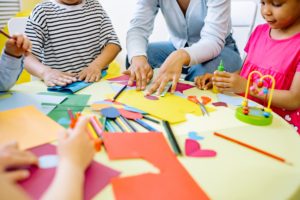
Occupational Therapy is all about helping children participate and do the jobs (or “occupations”) in their daily life that give them meaning – for example, playing, learn
ing, dressing, moving, and connecting with others.
For some of our OTs, we like to use “models” like the Model of Human Occupational (MOHO) to gain a holistic understanding of a child’s:
- Volition (what they love and are motivated by)
- Habituation (roles and routines)
- Performance capacity (how their body and brain works)
- Occupational identity (how the child views themselves as capable, valued, and unique when considering all the above).
Models like the MOHO help us OTs focus on the importance of identity and how that can impact the way a child might perform their daily occupations.
What is neurodiversity then?
Neurodiversity is a definition for explaining that our brains come in many different forms. For example, some children are autistic. Some have Attention Deficit Hyperactivity Disorder (ADHD). Some are sensory seekers, deep thinkers, or pattern spotters. Some love Bluey, while others love exploring water play. These differences are not deficits – they’re part of who they are.
We see and celebrate your child for their differences, not in spite of them.
We wrote a previous blog about neurodiversity, which you can read here.
How do OTs help?
Forming identities is a complex and ongoing process. For children, identity is formed as they receive answers to questions like, “Am I good at this?”, “Do people like me?”, “Can I do hard things?”.
As OTs, we help shape these inner narratives by:
- Creating safe spaces where children can explore, fail, try again, and succeed
- Using interest-based activities to spark joy and motivation (think Pokémon handwriting, LEGO regulation breaks, or dance-based movement)
- Supporting self-awareness through visual supports, emotion charts, and sensory profiles
- Co-regulating and modelling how to name feelings, ask for help, and celebrate wins
We also work closely with families to embed these supports into daily life and advocate for the child – because identity is built not just in therapy rooms, but in kitchens, classrooms, and playgrounds.
What children say about being themselves

“Developing a positive neurodivergent identity is increasingly recognised as crucial for individuals’ well-being… The child’s network environment was seen as crucial for their developing identity.” (Stark et al., 2025).
Here are some real (and paraphrased) reflections from children I’ve worked with:
“I like spinning in circles when I’m excited.”
“I think in pictures.”
“I need quiet time after school to feel calm.”
“I’m not broken – I’m just wired differently.
“I like being different. It makes me interesting.”
“I have lots of ideas. I can be so creative.”
These statements show us that when children feel understood and supported, they begin to see their strengths clearly. They build occupational identity – a sense of who they are, what they’re good at, and how they belong.
When children are not understood or celebrated, there can be a risk of developing poor self-identity:
“I have to keep my body still, otherwise I’ll get in trouble”
“I’m bad student because my brain got really busy and I missed what the teacher said”
“I try so hard to sit still, but my body doesn’t listen.”
“They say I’m too loud, too fast, too much.”
“I wish my brain had an off switch.
At Cooee, we adopt a neurodiverse-affirming approach to working with children from all backgrounds and life experiences. If you want to learn more about how we can celebrate the neurodiversity in your child, reach out and give our client care team a call to book a client journey planning session, where our therapists can talk to you about your child.
Written by Jaime Siu, Occupational Therapist
References:
Stark, E., Stacey, J., & Knight, M. T. D. (2025). Autism, identity and clinical practice: Supporting positive identity development in neurodivergent children and young people. Neurodiversity, 3, 1–15. https://doi.org/10.1177/27546330251370652