
Regulation and Routines: Occupational Therapy tools for Everyday Calm
Regulation Routines: Occupational Therapy Tools for Everyday Calm
Many children find it hard to stay calm, focused, and ready for learning.
They may:
- Move constantly or seem restless
- Become overwhelmed easily
- Struggle with transitions
- Have big emotional reactions
- Find group time or school routines hard
These behaviours are often signs that a child’s regulation system needs support.
At Cooee Speech Pathology & Occupational Therapy in Alderley, Brisbane, our Occupational Therapists help children build regulation routines so their bodies and brains feel calm, organised, and ready to learn.
What Is Regulation? (In simple terms) see our earlier blog here.
Regulation is the ability to:
- Stay calm but alert
- Manage energy levels
- Cope with changes and demands
- Move between activities smoothly
Children are not born with regulation skills.
They learn regulation through their bodies, with help from adults and routines.
Why Proactive Regulation Matters
Many people think regulation support should only happen after a meltdown.
Occupational Therapy focuses on proactive regulation — supporting the body before it becomes overwhelmed.
When regulation routines are in place, children can:
- Listen more easily
- Learn better
- Join in with others
- Feel more confident and safe
What Is a Sensory Diet?
A sensory diet is not about food.
It is a planned set of activities that give the body the sensory input it needs to stay regulated across the day.
Occupational Therapists design sensory diets to match each child’s needs, environment, and daily routines.
A good sensory diet:
- Is regular and predictable
- Includes movement and body-based activities
- Is adjusted as the child grows
Proprioceptive Play: “Heavy Work” for Calm Bodies
Proprioception is information from muscles and joints.
It helps children know where their body is and feel grounded.
Proprioceptive activities are often calming and organising.
Examples include:
- Carrying heavy items (books, bags)
- Pushing or pulling (chairs, laundry baskets)
- Climbing, crawling, or hanging
- Animal walks
- Wall push-ups
These activities can help children feel calmer and more in control.
Movement Breaks During the Day
Children are not meant to sit still for long periods.
Movement breaks help reset the nervous system and improve focus.
Occupational Therapy often recommends:
- Short movement breaks every 30–60 minutes
- Movement before learning tasks
- Movement after transitions
Movement can include:
- Stretching
- Jumping
- Dancing
- Obstacle courses
- Yoga poses
Vestibular Input: Movement That Helps Regulation
The vestibular system is linked to balance and movement.
It helps children understand how their body moves through space.
Helpful vestibular activities may include:
- Swinging
- Rocking
- Spinning (in small, supported amounts)
- Rolling
- Going up and down stairs
Some children need slow, gentle movement to calm.
Others need stronger movement to feel alert.
Occupational Therapists help find the right balance.
Visual Schedules and Predictable Routines
Visual schedules help children understand:
- What is happening now
- What is coming next
- When an activity will end
This reduces anxiety and emotional overload.
Visuals may include:
- Picture schedules
- First–then boards
- Timers
- Choice boards
Visual routines support regulation by making the day feel safe and predictable.
How to Spot Dysregulation Early
Early signs of dysregulation may include:
- Fidgeting or pacing
- Increased movement or silliness
- Avoiding tasks
- Changes in voice or tone
- Difficulty listening
- Emotional outbursts
When adults notice these early signs, they can:
- Offer movement
- Reduce demands
- Provide sensory input
- Support regulation before escalation
How Occupational Therapy and Speech Pathology Work Together
At Cooee in Alderley, Brisbane, Occupational Therapists and Speech Pathologists work closely together.
- Occupational Therapy supports body regulation, sensory processing, and routines
- Speech Pathology supports emotional language, understanding instructions, and communication
Together, this helps children:
- Feel calm in their bodies
- Understand what is expected
- Express needs clearly
- Participate in learning and groups
How Parents and Educators Can Support Regulation
Everyday support can include:
- Predictable routines
- Regular movement
- Visual supports
- Calm adult responses
- Adjusting expectations when a child is overwhelmed
Small changes can make a big difference.
When to Seek Occupational Therapy Support
Occupational Therapy may help if a child:
- Is frequently overwhelmed
- Struggles with transitions
- Has difficulty sitting, listening, or participating
- Needs constant movement or avoids it completely
Early support helps children build lifelong regulation skills.
Local Occupational Therapy Support in Alderley, Brisbane
Cooee Speech Pathology & Occupational Therapy supports children and families across Alderley and Brisbane Northside.
We offer:
- Occupational Therapy
- Speech Pathology
- Group programs
- Neurodiversity-affirming, play-based care
If you would like support with regulation routines, sensory needs, or everyday calm, our team is here to help.
-

- Use visual timers to support transitions
-

- Sensory items can help with breaks
-
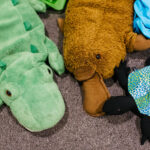
- Weighted toys provide proprioceptive input
-

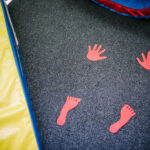
- Movement breaks can help reset the nervous system

-
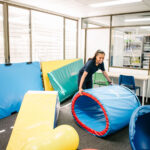
- Using different types of movement can assist with vestibular input
-
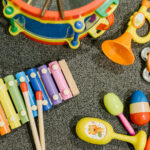
- Music and sound can provide supports for transitions and breaks
-
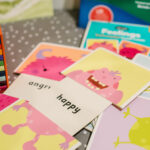
- Name it to tame it- label emotions
This blog was compiled and co-written by Speech Pathologist, Elizabeth Hall and Occupational Therapy, Jaime Siu February 2026

References
Ayres, A. J. (2005). Sensory integration and the child (25th anniversary ed.). Western Psychological Services.
Bundy, A. C., Lane, S. J., & Murray, E. A. (2002). Sensory integration: Theory and practice (2nd ed.). F. A. Davis.
Miller, L. J., Anzalone, M. E., Lane, S. J., Cermak, S. A., & Osten, E. T. (2007). Concept evolution in sensory integration: A proposed nosology for diagnosis. American Journal of Occupational Therapy, 61(2), 135–140. https://doi.org/10.5014/ajot.61.2.135
Pfeiffer, B., Clark, G. F., & Arbesman, M. (2018). Effectiveness of sensory integration interventions in children with autism spectrum disorders: A systematic review. American Journal of Occupational Therapy, 72(1), 7201190010p1–7201190010p10. https://doi.org/10.5014/ajot.2018.028431
Shanker, S. (2016). Self-reg: How to help your child (and you) break the stress cycle and successfully engage with life. Penguin Random House.
Dunn, W. (2014). Sensory profile 2: User’s manual. Pearson.