
What Emotional Regulation Really Means: Big Feelings, Little Bodies
Big Feelings, Little Bodies: What Emotional Regulation Really Means
When children have big feelings, it can look like meltdowns, withdrawal, silliness, or “not listening.”
But emotional regulation isn’t about behaviour or willpower — it’s about development.
Emotional regulation is the ability to notice, understand, and manage feelings in a way that supports learning, relationships, and everyday participation. For young children, this skill is still under construction. Their brains and bodies are learning how to cope with big emotions in a big world.
Understanding what emotional regulation really means helps parents and educators respond with support, not pressure.
At Cooee Speech Pathology and Occupational Therapy, our clinic in Alderley frequently sees clients, families and caregivers with many questions around emotional regulation. We are here to unpack that term a bit more!
What Is Emotional Regulation (in Child-Friendly Terms)?
Emotional regulation is a child’s ability to:
- Feel emotions without becoming overwhelmed
- Calm their body when emotions run high
- Stay engaged long enough to learn, play, and connect
- Recover after disappointment, frustration, or excitement
For children, regulation is not something they decide to do — it is something they develop over time with adult support.
This is why young children often need help to:
- Transition between activities
- Share or take turns
- Cope with change or uncertainty
- Listen and participate in group settings
Why Emotional Regulation Matters for Learning and Relationships
When a child is dysregulated, their brain prioritises survival over learning. In these moments, it becomes harder to:
- Listen and follow instructions
- Use language effectively
- Solve problems
- Engage socially
- Manage frustration or disappointment
Regulation is the foundation that allows learning and communication to happen. Without it, even strong cognitive or language skills can be difficult to access.
This is why children may appear “not ready” for group learning — not because they lack ability, but because their nervous system is overwhelmed.
Understanding the Brain: Dan Siegel’s Hand Model
One helpful way to understand regulation is Dan Siegel’s Hand Model of the Brain.
- The wrist represents the spinal cord and brainstem (basic survival functions)
- The thumb represents the limbic system (emotions)
- The fingers folded over represent the prefrontal cortex (thinking, planning, self-control)
When a child is calm and regulated, their “hand” is closed — emotions and thinking are connected.
When emotions become overwhelming, the child may “flip their lid.”
The thinking brain temporarily goes offline, making reasoning, listening, and problem-solving much harder.
Importantly, children cannot simply “turn” their thinking brain back on. They need support to return to a regulated state.
Co-Regulation Comes Before Self-Regulation
A common expectation placed on children is to “self-regulate” — to calm themselves independently. It’s not until children are between the ages of 8-12 that they can start to be more independent and self-directed with their own regulation.
However, self-regulation develops through co-regulation.
Co-regulation means an adult helps a child regulate by:
- Staying calm and emotionally available
- Naming emotions (“That was frustrating”)
- Offering physical or sensory support
- Providing predictable routines and transitions
- Modelling calm problem-solving
Through repeated co-regulation experiences, children gradually internalise these strategies and begin to regulate more independently over time.
This process is developmental, not instant.
How Occupational Therapy and Speech Pathology Work Together
At Cooee, emotional regulation is supported through a multidisciplinary approach, because regulation is not just emotional — it is sensory, physical, cognitive, and communicative.
Occupational Therapy supports regulation by focusing on:
- Sensory processing (how children take in and respond to sensory input)
- Body awareness and postural control
- Movement, proprioceptive, and calming strategies
- Environmental and routine adjustments
Speech Pathology supports regulation by focusing on:
- Understanding and using emotion language
- Comprehension of expectations and transitions
- Social communication and perspective-taking
- Expressing needs, feelings, and boundaries
When OT and Speech work together, children are supported to:
- Feel regulated in their bodies
- Understand what is happening around them
- Communicate their needs effectively
- Participate more confidently in learning and social environments
What This Means for Parents and Educators
If a child is struggling with emotional regulation, it is not a sign of poor behaviour, poor parenting, or lack of motivation.
It is a sign that the child needs:
- Support with underlying regulation skills
- Predictability and connection
- Developmentally appropriate expectations
- Adults who can help them feel safe and understood
Supporting regulation early helps children build the foundations for:
- Learning
- Friendships
- Confidence
- Emotional wellbeing
When to Seek Support
If big feelings are:
- Frequent or intense
- Interfering with learning or relationships
- Making transitions consistently difficult
- Affecting a child’s confidence or participation
Speech Pathologists and Occupational Therapists can help identify what is contributing to these challenges and build the skills children need to feel more regulated and supported. At our clinic, located in Alderley, Brisbane, we support families, caregivers, parents and educators.
Our Occupational Therapist, Ashley Hannan recorded a parent webinar in December, 2025 on Big Feelings, Little Bodies, that is available here.
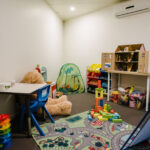
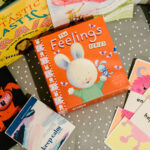
-
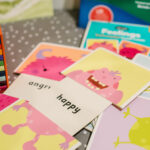
- Name it to tame it- label emotions

-
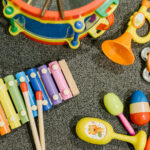
- Music and sound can provide supports for transitions and breaks
-

- Use visual timers to support transitions


-

- Using different types of movement can assist with vestibular input



This blog was written with content from the Big Feelings, Little Bodies webinar by Occupational Therapists, Ashley Hannan and Kiara Moodley, 2025 and compiled in January 2026 by Speech Pathologist, Elizabeth Hall.
References:
Siegel, D. J. (2012). The developing mind: How relationships and the brain interact to shape who we are (2nd ed.). Guilford Press.
Siegel, D. J., & Bryson, T. P. (2011). The whole-brain child: 12 revolutionary strategies to nurture your child’s developing mind. Delacorte Press.
Shanker, S. (2016). Self-reg: How to help your child (and you) break the stress cycle and successfully engage with life. Penguin Random House.
Murray, D. W., & Kochanska, G. (2002). Effortful control: Factor structure and relation to externalizing and internalizing behaviors. Journal of Abnormal Child Psychology, 30(5), 503–514. https://doi.org/10.1023/A:1019821031523
Zinsser, K. M., & Bailey, C. (2020). Social-emotional learning in early childhood education: Moving beyond the basics. Early Childhood Education Journal, 48(4), 467–476. https://doi.org/10.1007/s10643-020-01045-3
Liu, M., & Lan, H. (2021). The role of social-emotional learning in promoting social competence in young children: A systematic review. Early Education and Development, 32(7), 1099–1116. https://doi.org/10.1080/10409289.2020.1869450
Feldman, R. (2012). Parent–infant synchrony: A biobehavioral model of mutual influences in the formation of affiliative bonds. Monographs of the Society for Research in Child Development, 77(2), 42–51. https://doi.org/10.1111/j.1540-5834.2011.00660.x
Blair, C., & Raver, C. C. (2015). School readiness and self-regulation: A developmental psychobiological approach. Annual Review of Psychology, 66, 711–731. https://doi.org/10.1146/annurev-psych-010814-015221